

Shore Friendly Program at SSA
Salish Sea shorelines are Complex and Dynamic
The Shore Friendly program helps take some of the complexity out of decision making by connecting landowners to the expertise, tools and services to manage erosion and address concerns with habitat friendly methods.
As a shoreline landowner, you are more connected than most to the beautiful, complex, and increasingly fragile marine ecosystems of the Puget Sound. Living in close proximity to the shoreline presents the challenge of managing the natural process of shoreline erosion.
Our Goal:
By making environmentally responsible decisions, you can protect both your home and the health of Puget Sound. Choosing natural approaches, rather than hard armoring, promotes healthy marine ecosystems and reduces risks of property damage.
Site Visits Provided
What do Healthy Shorelines Look Like?

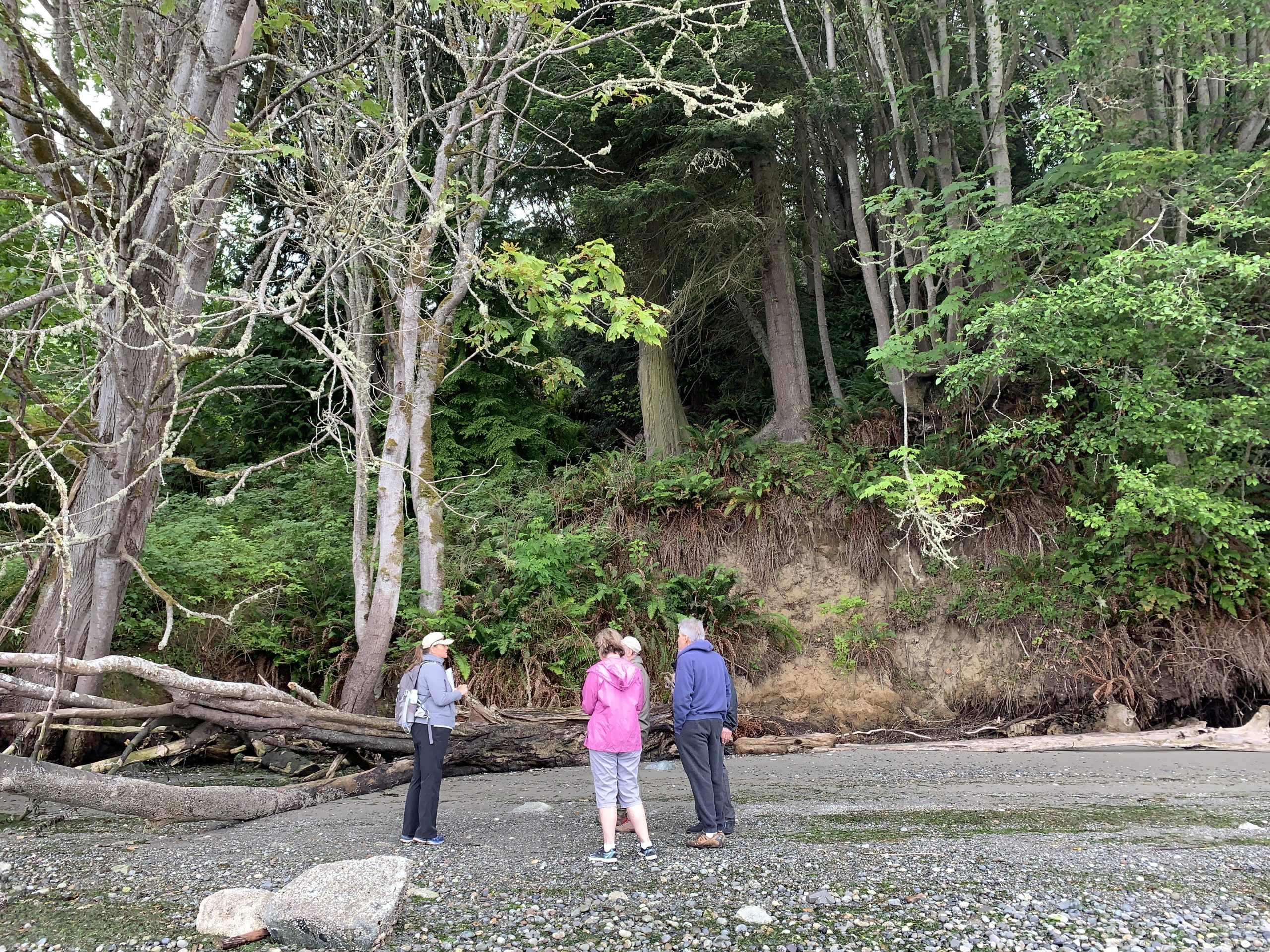
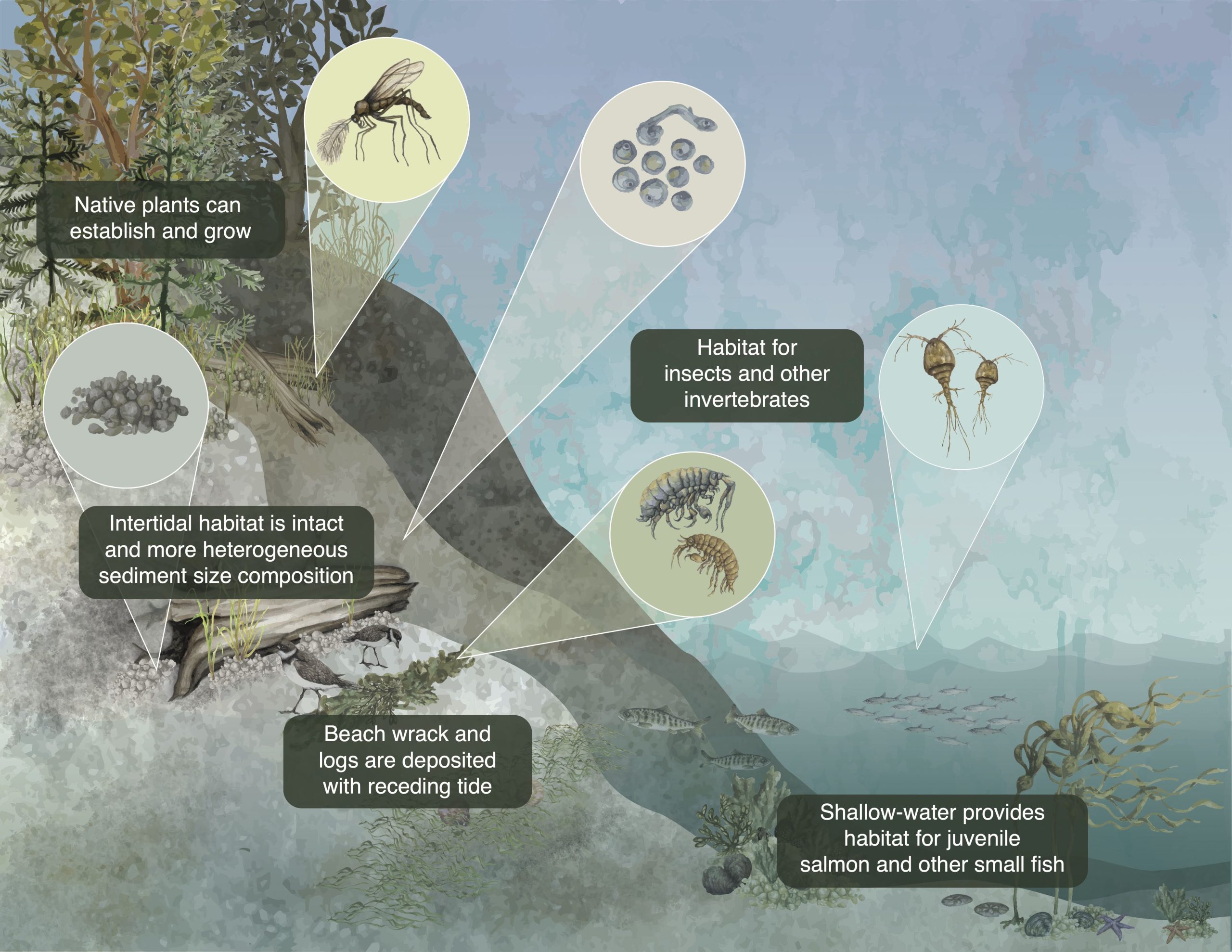
Native vegetation including trees and shrubs overhangs the beach providing slope stability, buffering wave energy, and creating shade and supplying insects for fish, shore birds, and mammals.

Messy beaches are healthy beaches and include large woody debris and beach wrack. Logs and driftwood provide shelter and erosion control. Beach wrack – organic material such as eelgrass and kelp - deposited by tides – supports a diversity of invertebrates that are crucial food sources for birds and migrating salmon.

Remove shoreline armor and bulkheads wherever it’s feasible. Natural and restored shorelines are more resilient to climate change than modified shorelines.

Infrastructure including homes and septic systems are set back above predicted sea level rise heights and sufficiently landward of bluff crests.
The Dynamic Power of Natural Shorelines
The Puget Sound shoreline is constantly evolving. Wind, waves, tides, and gravity work together to shape and reshape our bluffs and beaches, naturally moving sediment along the coast. These dynamic processes are not just geological—they’re ecological. As sediment shifts and accumulates, it builds beaches and creates vital nearshore habitats that support a rich diversity of marine life.
Why It Matters
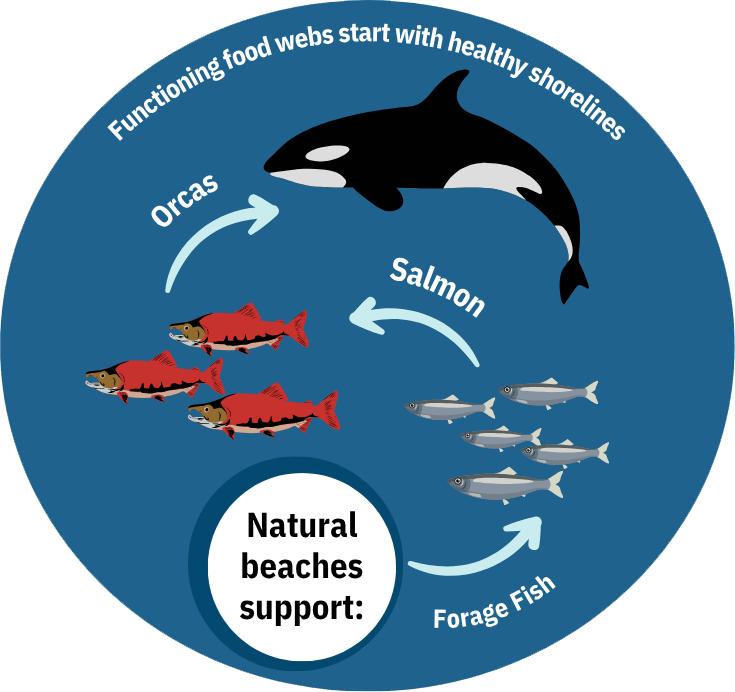
At the foundation of Puget Sound’s marine food web are forage fish—small schooling species like Pacific sand lance and surf smelt. These two species spawn on upper beaches, depositing their eggs in sand and gravel zones that are directly shaped by shoreline processes. They, in turn, are a critical food source for larger predators such as salmon, seabirds, and marine mammals.
Unfortunately, many of these natural beaches are being lost to shoreline armoring—structures like bulkheads and riprap built to protect property from erosion.
Today, roughly 25% of Puget Sound’s 2,500 miles of shoreline is armored, much of it on residential properties. Yet, most of these areas face only low to moderate erosion risk, meaning hard armor is often unnecessary.
In the long run, these structures can compromise both property and ecosystem health. As sea levels rise, natural erosion helps replenish beaches, while bulkheads can lock away sediment and become increasingly vulnerable to damage. In many cases, the best approach is to let shorelines function naturally. While well-intentioned, these hard structures often disrupt natural sediment movement, eliminate upper beach habitat, and degrade the nearshore zone essential to forage fish and juvenile salmon.

The Ripple Effect
Salmon, a cornerstone species of the Pacific Northwest, rely on healthy nearshore environments for food, protection, and space to grow before heading out to sea. When bulkheads are built below the high tide line, they can prevent the formation of shallow, sloping beaches, reducing the habitat young salmon need to survive.
When forage fish and salmon populations decline, the impact reverberates throughout the food web. Eagles, orcas, and other top predators face increased competition and reduced food availability. Ecosystem resilience weakens, and the rich biodiversity of the Salish Sea suffers.
The Bottom Line
A functioning, resilient food web starts with a healthy shoreline. By preserving and restoring the natural processes that shape our coasts, we protect the species we love and the ecosystems we depend on. It all begins on your beach.
How We Help
Expert Guidance &
Site Visits
If you have a concern related to your shoreline such as failing hard armoring, erosion, vegetation, and drainage we can help with design assistance, technical assistance and permitting support. We provide the technical resources needed to turn Shore Friendly ideas into action, but it all starts with a free site visit with our coastal professionals. For waterfront property owners in Whatcom, Skagit, Snohomish, Jefferson and Clallam counties, use the link below to sign up for a free site visit. In San Juan County, we are proud to partner with Friends of the San Juans for Shore Friendly assistance. You may contact them directly or connect with us.
Shore Friendly programs are available across the Puget Sound region. Visit ShoreFriendly.org, a public information website for waterfront homeowners who care about the health of Puget Sound to find a program in your area.
Community Beach Walks
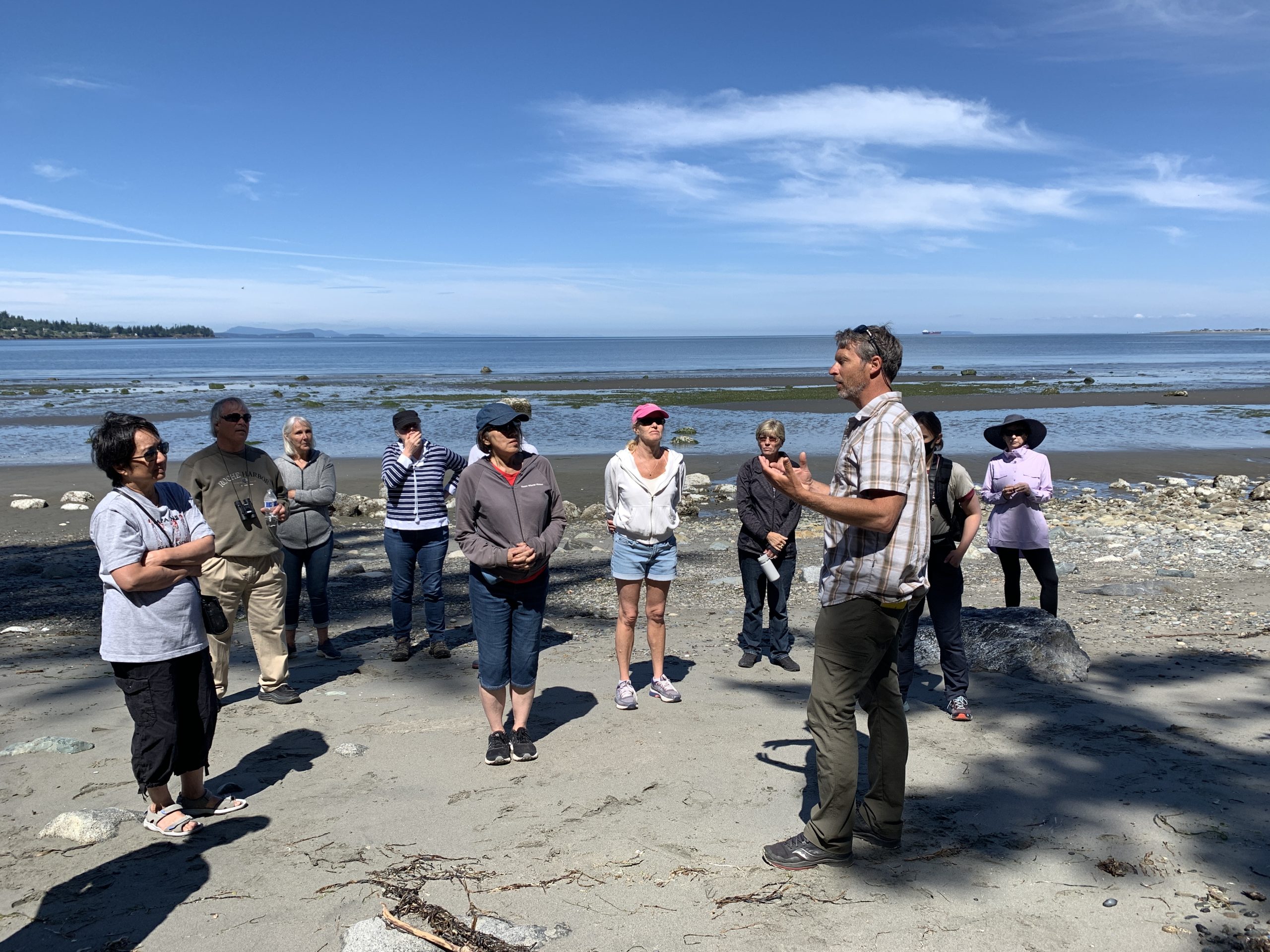
Invite your neighbors and join our coastal specialists for a beach walk focused specifically on your shoreline. Together we’ll explore erosion patterns, drainage, vegetation, and other factors that shape your stretch of coast. Use our site visit request form or contact us directly to arrange a beach walk that fits your schedule, or check out our upcoming events to see if a walk is already scheduled in your neighborhood.
Landowner and Contractor Workshops
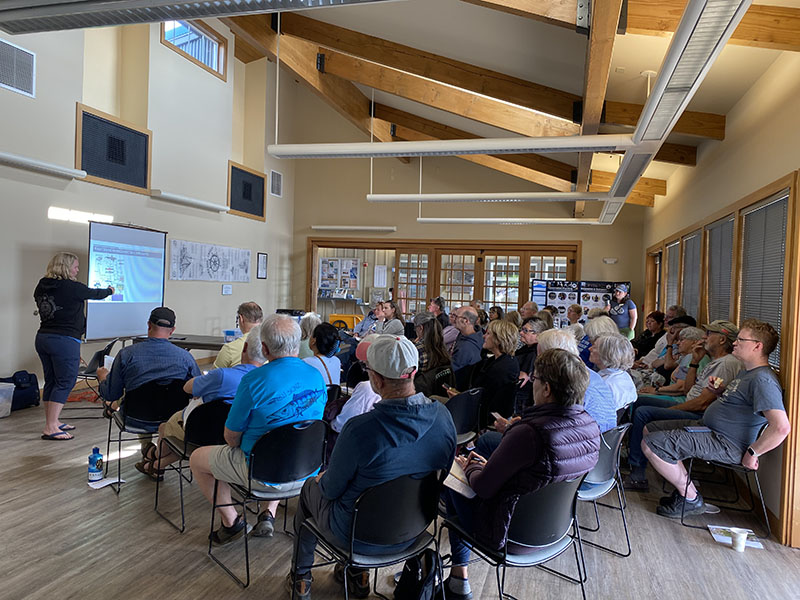
Our workshops give landowners and contractors the knowledge to make informed decisions on a variety of topics including: coastal and beach processes, managing beach and bluff erosion, alternatives to hard armoring, benefits of bulkhead removal or reduction, use of native vegetation and properly managed drainage for slope stability & habitat. adapting to sea level rise and climate change.
Cost Share Options
& Permitting Assistance
Restoration projects can be expensive and complex, and we recognize that steep costs can be a barrier to improving habitat and stability for shoreline properties. We want to help to lessen the financial burden and are committed to helping to the greatest extent possible. We offer cost-share solutions to qualified shoreline property owners who are interested in armor removal, vegetation enhancements, drainage improvements, and even home relocation. Permitting assistance is also available to ease the concerns many landowners have with working through the regulatory process.

Resources
Explore the following resources to deepen your understanding of shoreline dynamics—and discover tools, guides, and local expertise to help you make informed, sustainable choices for your shoreline property and the surrounding environment.
Changing Conditions
Changing Conditions
Erosion
Erosion
Smart Development
Smart Development
Vegetation
Vegetation
Drainage
Drainage
Permitting Assistance
Permitting Assistance
Shore Friendly Living Video Series
The Salish Sea Alliance proudly presents Shore Friendly Living — a dynamic video series that brings our popular Shore Friendly workshops to life. Dive into the fascinating world of shoreline stewardship as we explore everything from coastal geology and natural processes to shoreline armoring, restoration, and beyond. Whether you’re a waterfront landowner or simply curious about coastal ecosystems, this series offers an inside look at the science, strategies, and stories behind creating healthier shorelines for people and nature alike.
Understanding Hard Armor and Its Trade‑Offs
Hard armor encompasses man‑made structures such as bulkheads, seawalls, riprap, and breakwaters that are installed to curb shoreline erosion by holding back sediment from bluffs and upper‑shore areas. Today, roughly 25 percent of Puget Sound’s 2,500 miles of shoreline is armored, some along rail lines and roads, but much of it fronting residential properties. Without the participation of shoreline landowners many of the iconic species and habitats of this region may be lost.

Hard Armor Impacts
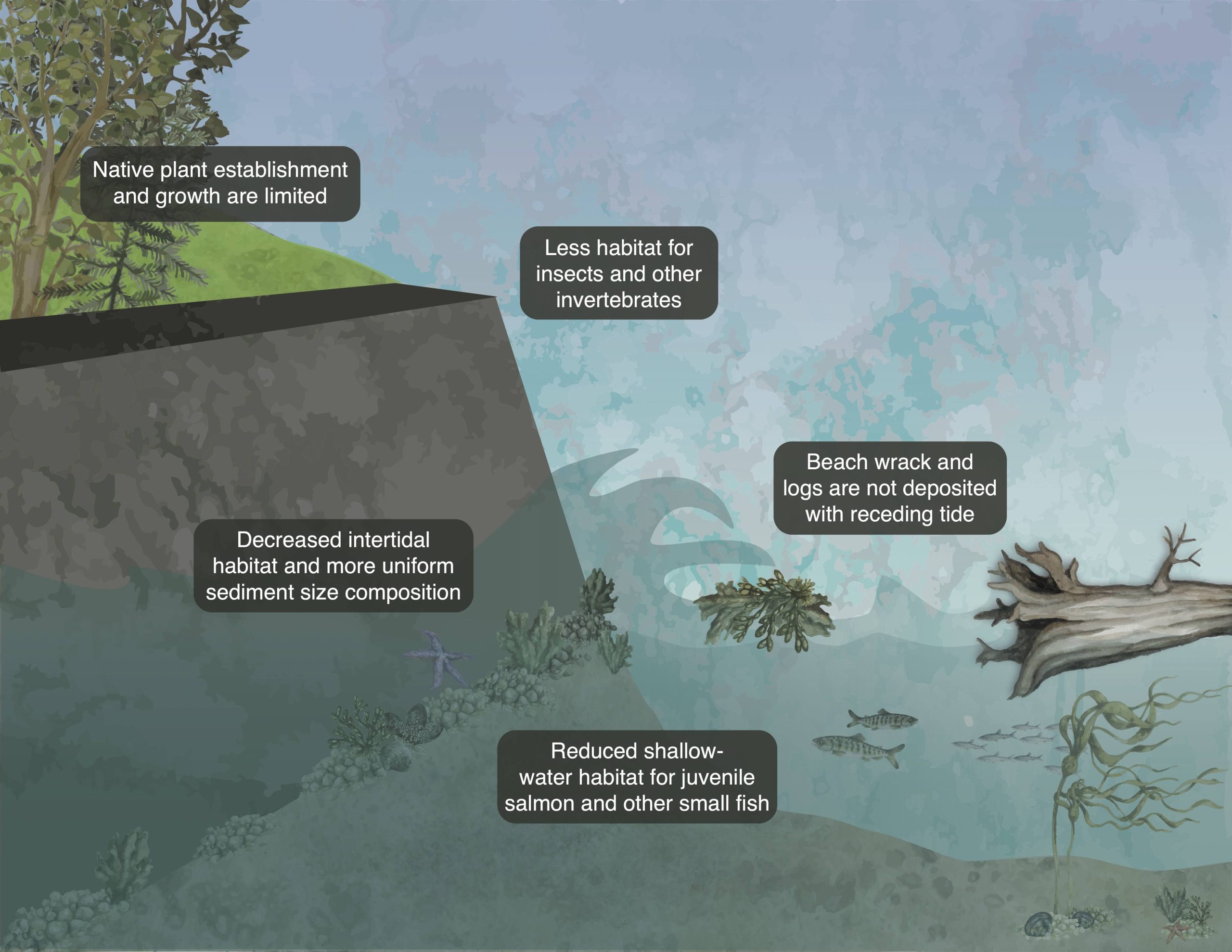
Where armor is added unnecessarily, it tends to bury beach habitats, strips the beach of sand and gravels necessary for surf smelt and Pacific sand lance to spawn, intensifies erosion in front of the bulkhead and on neighboring properties, and disrupts the delicate balance of habitats that sustain salmon, shellfish, forage fish, and other native species.
Natural shorelines are dynamic and adapt to changing conditions. As sea levels rise, eelgrass beds and beaches will migrate landward maintaining the shallow water conditions of the nearshore. Hard armor creates a static condition, effectively squeezing habitats into more confined and deeper zones.
Does it truly control erosion?
Most waterfront homes in Puget Sound sit on shorelines with low to moderate erosion risk. The natural geology, native vegetation, and proper drainage often provide sufficient natural protection and erosion rates are generally low around the Sound on average. Sediment that would ordinarily make its way to the beach and build up beach elevation becomes trapped behind these walls resulting in a lowering of the beach waterward of the structure.
Graphics by Simone De Roches

How does armor fare as sea levels rise?
Healthy bluffs and beaches naturally release sediment that rebuilds shorelines over time. Bulkheads, however, lock up that sediment—so beaches cannot keep pace with rising waters—and the structures themselves are increasingly prone to overtopping or failure. Bulkheads also do not effectively stop waves and flooding, and in many cases can make the problem worse by trapping water behind the wall, increasing the risk of failure while adding to the rate of erosion.
In many settings, even with rising sea levels and a changing climate, the most resilient and cost‑effective solution is to allow the shoreline to function naturally or to use softer, nature‑based approaches. Explore the animation below to see how hard armor affects salmon habitat and learn when living shorelines may be the smarter choice.
Benefits Of Bulkhead Removal
Graphics by Simone De Roches
Contact us to schedule a free site visit.
Sunlight Shores Restoration Project
Past Projects
Check out Shore Friendly Projects that are now completed Nearshore Restoration Sites!


NW Straits Foundation
Office Phone No.
(360) 733-1725
Our Email Address
info@nwstraitsfoundation.org
Office Address
Salish Sea Alliance
1155 N State St Ste 400
Bellingham, WA 98225
Salish Sea Alliance